
 Facebook
 X
X
 Pinterest
 Copy Link
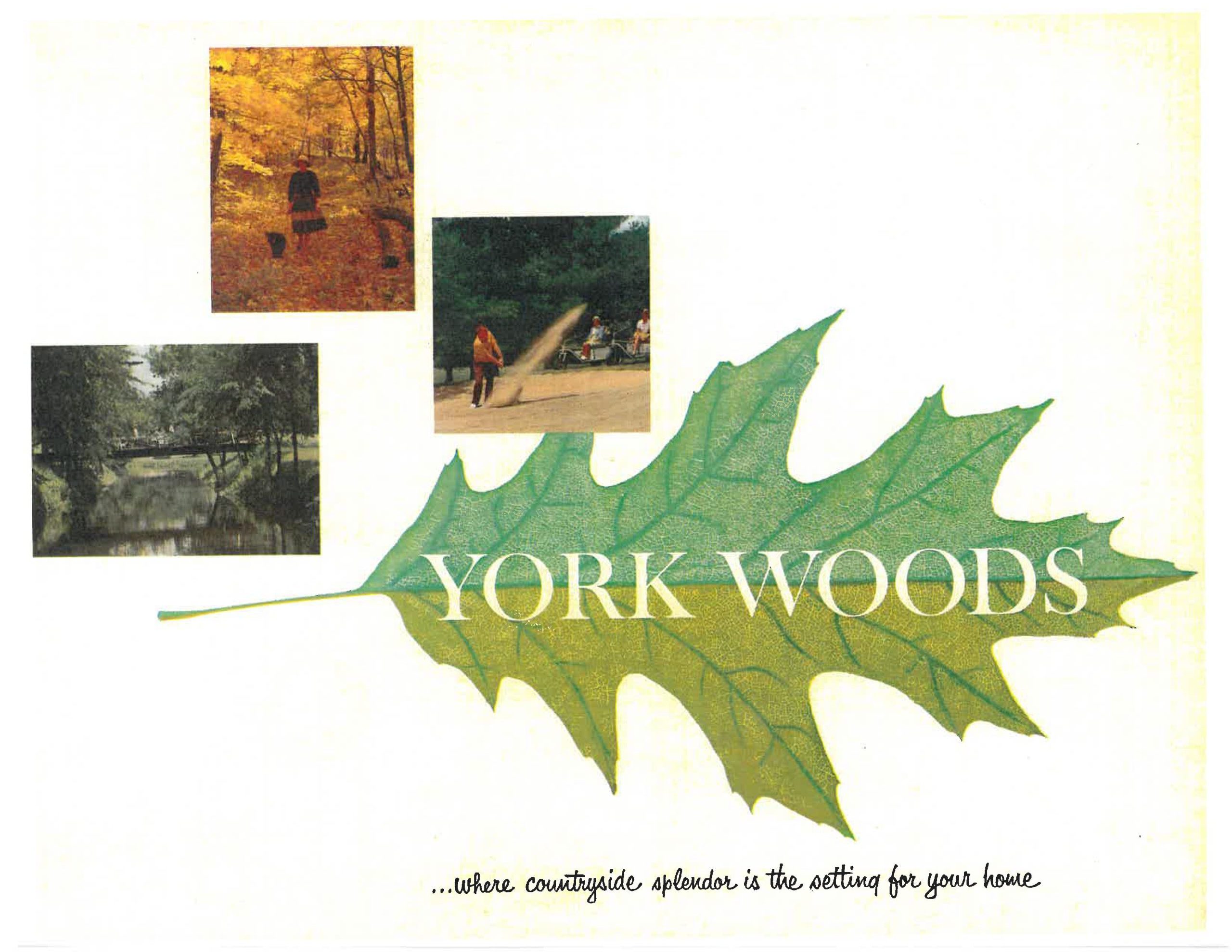
A History of the York Woods Subdivision in Oak Brook, Illinois
Nestled in the heart of Oak Brook, Illinois, the York Woods subdivision stands today as one of the community’s most established and historically rooted residential neighborhoods. Its story reflects the broader growth and development of Oak Brook during the mid‑20th century—a time when the village was rapidly evolving from rural farmland into an affluent suburban enclave.
Early Foundations and Formation (1962–1965)
York Woods began to take shape in the early 1960s, during an era of transformation spurred by local landowners and community leaders. The subdivision’s legal and organizational foundation was set in 1962, when a set of protective covenants was drafted to guide future property ownership and development. These covenants established standards for residential architecture, land use, and community governance—principles that continue to influence the neighborhood today. [yorkwoods.org]
On March 29, 1963, the York Woods Community Association (YWCA) was formally incorporated. Its first president, Paul Butler, served from 1963 to 1965. Butler, a key figure in Oak Brook’s development, played a major role not only in shaping the subdivision but also in transforming the entire area into an upscale residential and commercial community. [yorkwoods.org]
Geographic Boundaries and Layout
York Woods was strategically positioned within Oak Brook’s expanding footprint. The subdivision is bordered by:
- 22nd Street to the north
- 31st Street (Oak Brook Road) to the south
- I‑294 to the east
- York Road to the west
The original development included 259 parcels, all bound to the community association through the original protective covenants. Over time, an additional 25 parcels along York Road, Oak Brook Road, and Hunt Club Lane were added as associate members, broadening the community’s footprint while maintaining cohesion with the original neighborhood design. [yorkwoods.org]
Expansion and Later Development
As Oak Brook continued to grow in the 1970s and early 1980s, York Woods did as well. After the construction of the nearby Drake Office Plaza, the landowner Drake Oak Brook, Inc. subdivided its remaining property into 20 additional lots. These were officially incorporated into the York Woods protective covenants on September 17, 1982, marking the last major subdivision within the community. [yorkwoods.org]
This final expansion cemented York Woods as one of Oak Brook’s premier residential areas, characterized by spacious lots, custom homes, and a well‑organized homeowners association committed to maintaining the neighborhood’s character and value.
York Woods Within the Larger Context of Oak Brook’s History
York Woods’ development aligned with Oak Brook’s transformation from its historical roots—stretching back to the days of Fullersburg—to a modern, well‑planned suburb. The growth of communities like York Woods played a significant role in shaping Oak Brook’s identity as an upscale residential destination with carefully managed development and strong community involvement.
Legacy and Today’s Community
Today, York Woods remains a highly desirable neighborhood known for its mature landscaping, extensive green spaces, and proximity to key Oak Brook amenities including:
- Butler National Golf Club
- Oak Brook Shopping Center
- Forest preserves and trail systems
Most homes in the subdivision were built in the 1960s, though some later infill homes were constructed through the early 2000s, reflecting a blend of classic and contemporary architectural styles. An emerging trend has been tearing down original homes and building new custom high-end luxury residences.
The homeowners association continues to play an active role in neighborhood stewardship, reflecting the community‑centered vision established over 60 years ago.


